

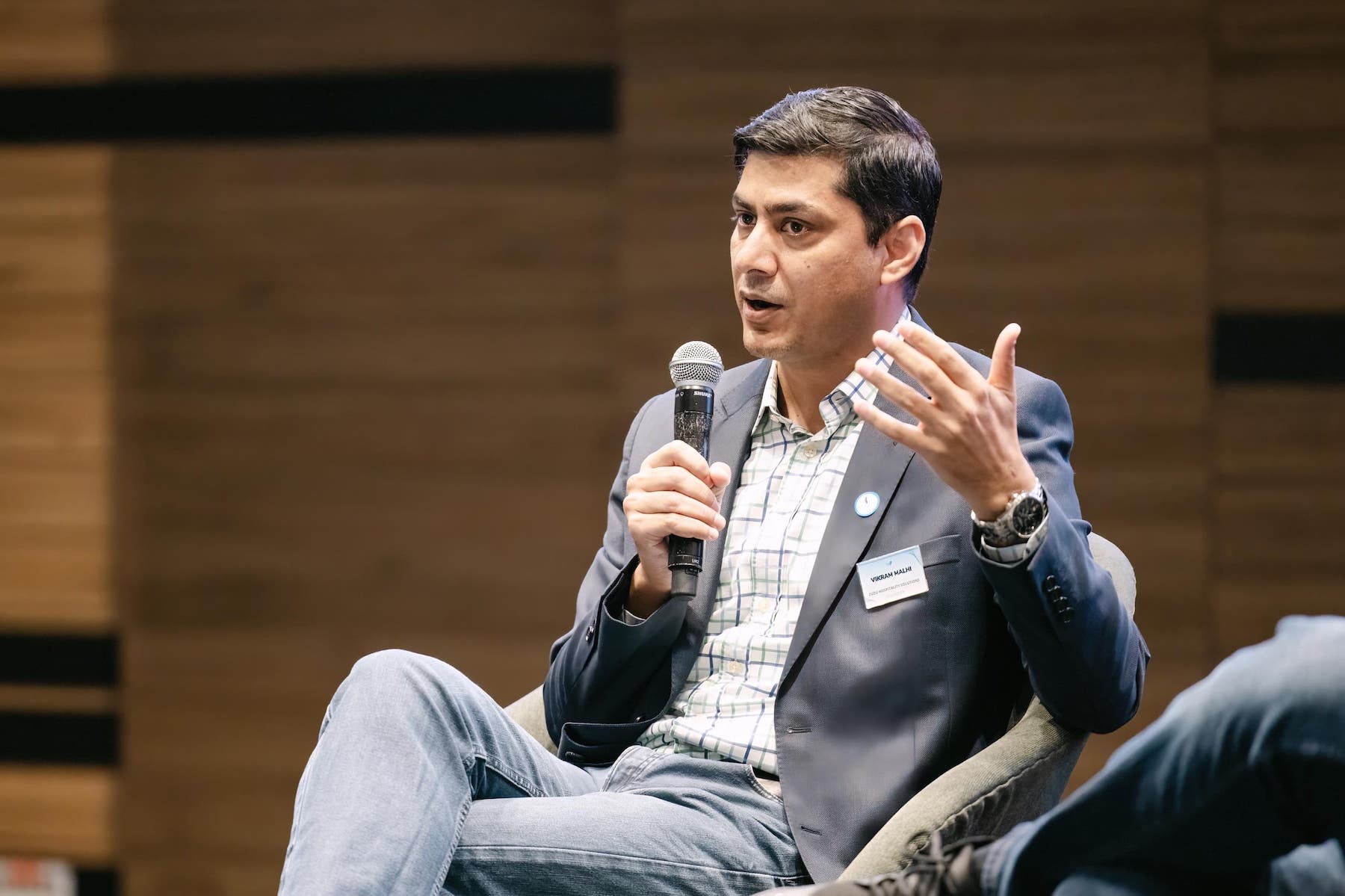
In a region where big hotel chains dominate online bookings, ZUZU Hospitality is arming independent properties with AI-powered tools and expertise to claim their rightful share of the market, driving impressive growth for thousands of local businesses.
Back in 2016, Vikram Malhi made a bold move. After 10 years at Expedia, where he had managed critical aspects of the company’s global operations, he decided to walk away. On paper, it didn’t make much sense. He had a thriving career, a big title, and the security of working at one of the world’s largest online travel companies. But something kept nagging at him: the glaring imbalance between big hotel chains and the thousands of small, independent hotels across Southeast Asia.
Under Jakarta’s sweltering sun, he hopped on a Gojek motorbike and crisscrossed the city, dropping by small hotels and talking with owners. He wanted to hear their struggles firsthand. Could a tech-driven solution help them attract more bookings? Could he help level the playing field?
The response was immediate. Owners didn’t just nod politely, they asked: “Do you have a contract I can sign?” At that point, he had no contract, no product, no company. Just an idea. Encouraged, he flew to Kuala Lumpur and repeated the experiment in Bukit Bintang, one of the city’s busiest tourist districts. Again, the answer was clear: the demand was real.
A few months later, Vikram launched ZUZU Hospitality Solutions: an innovative all-in-one tech platform centered on its proprietary, in-house revenue management software, designed specifically to empower independent hotels. The mission was straightforward: help small hotels boost revenue and compete with giants like Expedia, Booking.com, and global chains.
Today, ZUZU has become a trusted partner for more than 3,000 hotels across Southeast Asia, consistently lifting occupancy rates by 30-40% and helping owners capture a fairer share of online demand.
Why Independent Hotels
For Vikram, it’s not just a business opportunity – it’s personal. He’s drawn to the authenticity of independent hotels: mostly family-run properties where the owner might check you in themselves, recommend the best local street food, or share hidden gems you’d never find in a guidebook.
“My passion for independent hotels comes from the genuine care behind them. These owners aren’t just offering rooms; they’re sharing their neighbourhoods, their favourite spots, and the pride they have in their own community. And as the industry evolves, we need to protect that individuality — because a world where every hotel feels identical would take the soul out of travel.”
These hotels are also vital to local communities. They employ locals, preserve culture, and provide travelers with more meaningful stays. However, without digital tools, they risk being left behind in a world where bookings are increasingly made online.
One story illustrates ZUZU’s impact. In 2017, a modest 3-star hotel in Jakarta was stuck at 40% occupancy. With limited online presence, it simply couldn’t compete. After partnering with ZUZU, things changed quickly. By connecting them to more booking platforms, optimising their pricing, and streamlining their operations, ZUZU helped the hotel’s occupancy to surge to 90%. Revenue also jumped 70%.
For Vikram, stories like these are what fuel the mission.
A Fragmented Hotel Market
To understand the problem ZUZU is solving, let’s look at the numbers. Southeast Asia has around 75,000 hotels, and a staggering 90-95% of them are independents–small, often family-owned properties. But despite their dominance in numbers, they capture only a fraction of online booking revenue: 20-30%. The bulk still flows to chains.
The reason for this is chains have sophisticated tech and dedicated revenue and marketing teams. Independent hotels typically don’t. Many rely on manual systems or outdated software. They struggle with dynamic pricing, online visibility, and digital marketing. Without help, they remain invisible on booking platforms where algorithms favour well-resourced players.
Vikram first encountered this gap during his tenure at Expedia, where his passion for travel–sparked by years of travelling globally as a consultant across diverse industries (chocolate manufacturing to insurance) – collided with the realities of the market. “I thoroughly enjoy travel. Even today when I get on a plane, I’m super excited,” he says. Seeking a blend of tech and travel, he joined Expedia in the US in 2008, where he honed his skills managing global products, customer marketing initiatives, and eventually spearheading the company’s expansion into Asia in 2011. This included launching operations across Southeast Asia and India, and taking charge of the Asia P&L from a brand perspective.
It was in Southeast Asia that Vikram grappled with the intricacies of partnering with independent hotels, which consumed his final 3 years at Expedia. Chains were easy partners: tech-ready, well-staffed, and experienced in working with OTAs. By contrast, independent hotels had high staff turnover, limited digital literacy, and little infrastructure. Training them was a constant uphill battle, and eventually, Expedia couldn’t justify the investment.
But Vikram couldn’t shake the question: What if there was a way to give independent hotels the same tools as chains – without the overhead?
Building ZUZU
Vikram’s unique perspective, forged from OTA insider experience, revealed that while others saw the problem, few approached it with a focus on empowerment over branding.
“That’s how ZUZU started. We wanted to make sure that independent hotels could survive, compete, and get the best technology and service that the big chain hotels had.”
ZUZU’s model rests on 2 pillars:
- An intuitive all-in-one tech stack – centralising everything from reservations, pricing, revenue management, channel management, to reputation management and even payments. Instead of juggling multiple vendors that offer these services, hotels get one system that truly works.
- A service layer of expertise – ZUZU doesn’t just hand over software, it acts like a hotel’s outsourced revenue management team, guiding strategy and optimising performance.
The result: independent hotels quickly gain capabilities usually reserved for big brands. Moreover, ZUZU’s model doesn’t require heavy upfront investment. Unlike other hotel startups that required hotels to rebrand or renovate to join a network, ZUZU delivers value immediately. Hotels see their revenue rise within months, and since ZUZU takes a cut of bookings, incentives are perfectly aligned.
Why ZUZU Stands Out: Growing with Hoteliers
When Vikram started ZUZU, several other startups were chasing the same market. Companies like OYO and RedDoorz promised consistency through branding – standardising linens, room decor, and amenities. The approach became popular among investors, raising billions in funding and scaling quickly. But it also came with costs. Owners had to invest heavily into capex while inconsistent quality diluted trust among end-customers.
ZUZU chose a different path. “We don’t want to spend money…. on building a brand experience that may or may not be consistent,” Vikram explains. Instead, the focus is squarely on results – boosting hotel bookings, optimising pricing, and providing ROI (typically 40-50% online revenue increase within 3 to 6 months and 30-40% occupancy growth).
This capital-efficient model avoids splashy marketing and builds loyalty organically. And once revenue flows, ZUZU advises on targeted improvements, like enhancing review scores through data-driven insights, making conversations collaborative rather than prescriptive.
ZUZU’s defensibility comes from the nature of its market. Because the space is fragmented, bringing hotels on board takes personalised outreach – a slow, often tedious process that naturally keeps out fast-moving competitors. But once a hotel is integrated, ZUZU’s tech takes over critical functions that at that point, it becomes hard to imagine running without it, which drives strong retention. And what has started as a manual, hands-on effort has now scaled into a system that can easily handle 200 to 300 new hotel partners every month through automation.
As of August 2025, ZUZU has partnered with 3,000 independent hotels across Asia. Indonesia is the largest by hotel count, while Thailand generates the most revenue, thanks to high-value tourism in Bangkok and Phuket. The network also stretches into Malaysia, the Philippines, Vietnam, India, and Singapore. With 80 to 100 new hotels coming in each month, ZUZU expects to reach 3,200 hotels by year-end.
The numbers tell part of the story but ZUZU’s impact goes further. By helping independent hotels thrive, the company is supporting local jobs, strengthening local economies, and protecting cultural authenticity. That shows up not just in revenue growth, but in the survival of stories of hotels that weathered crises like the COVID pandemic with ZUZU by their side.
The Rollercoaster Years
One of the turning points for ZUZU was building its own tech. It started with the basics–its proprietary, in-house revenue management software and integrated with external channel management systems–and quickly leaned into automation. That shift freed teams from repetitive work and made scaling possible. At the same time, the company tightened its structure. Early on, people wore many hats, but within the first year and a half, ZUZU split roles more clearly–sales on one side, revenue management on the other. “Setting that structure early on and very quickly was the other piece that helped us scale up towards Series B,” Vikram recalls.

The challenges kept evolving. In the beginning, emotions ran high. “Every Friday or Monday I’d be like, oh, we’re not going to make it,” Vikram admits, looking back on the trial-and-error days when resources were thin. As growth picked up, the struggle shifted to hiring–finding the right people, aligned culturally, across very different markets. What worked in Thailand, where teams valued sensitivity, didn’t always resonate in India, where directness ruled.
Then came COVID-19, which nearly wiped everything out. With ZUZU’s model tied to bookings, revenue dropped 90% in just weeks. Borders shut, tourism froze, investor conversations evaporated. “It felt like survival was improbable,” Vikram says. But the team moved fast: cutting costs deeply, leaning into domestic travel, striking new partnerships, and strengthening infrastructure to weather the storm. They kept morale alive with virtual check-ins and small wins, while adapting constantly, launching promotions to spark demand and targeting hotels that lacked tech to stay afloat. Out of that crucible came resilience and unity. “At a leadership level, we all bonded a lot more through the emotional ups and downs, and we came out stronger.”
The grit paid off. By 2023, ZUZU not only survived but impressed its investors enough to close a Series B. In August 2025, it extended that round, raising US$5.9M from Wavemaker Growth, the Growth Fund of Wavemaker Partners; Velocity Ventures; Vulpes Ventures; and Latin Leap. The Wavemaker relationship runs deep, dating back to a US$2M Seed round in 2017, then Series A in 2019, and Series B in 2023.
As Shiv Choudhury, Founding Partner at Wavemaker Growth, puts it: “These hotels don’t have the technology and expertise that big chains have… ZUZU democratises access to top-notch technology and AI, helping them maximise revenue and grow occupancy rates. We’re excited to partner not just financially, but operationally–in go-to-market and organisational growth.”
Since then, ZUZU has doubled down on sharpening its sales motion, spotting high-value prospects, tightening conversions, and growing its teams. Profitability is now in focus. “Especially after this Series B Extension, within the next 6 to 9 months, we’ll be more strategic,” Vikram explains. “We want to refine sales efforts so we can increase our revenue per hotel.”
And Wavemaker’s impact goes far beyond capital, according to Vikram. They’ve been a sounding board since the early days—making introductions, sharing advice, and even sparking new ideas.
Conversations with Wavemaker Growth team led to experiments like “sales sprints” (grouping teams for focused market pushes, which boosted efficiency by 40%) and a freemium model (letting hotels try the tech immediately, already pulling in 10 sign-ups last month). Many of these ideas were born over casual dinners, where Wavemaker’s data-driven insights also helped refine operations. The relationship has been less about investor updates and more about co-creating growth.
Levelling the Playing Field for Independent Hotels
For Vikram, ZUZU is still only scratching the surface of Southeast Asia’s massive hospitality market. There’s plenty of untapped potential, and right now, the team is doubling down on two big frontiers.
The first is AI. ZUZU’s RevMate platform already taps into proprietary data from hotel partners to automate pricing and distribution, giving independents the kind of real-time insights they need to stay competitive when demand shifts. “We’re witnessing the most significant transformation in hospitality since the internet,” Vikram says. “AI is reshaping how demand is predicted and revenue is optimised.” This year’s investments reflect that–AI co-pilots that can generate instant reports for revenue managers, and tools that automatically respond to guest reviews. It’s all part of a broader trend: McKinsey estimates AI could unlock US$400 billion in value for the industry through smarter pricing, personalisation, and efficiency.
The second focus is ancillaries. These are the extras that major hotel chains rely on for 40 to 50% of their revenue, from airport transfers to dining and activities. Independent hotels often miss out here. ZUZU is building tools to close that gap, like QR codes in rooms for real-time promotions. Pilots are already live for pickups and e-SIMs, with more to come. The idea isn’t just to boost revenue but to turn each stay into a more complete guest experience.
Looking further ahead, Vikram sees opportunities in HR tools to help hotels manage staffing, procurement platforms to unlock bulk buying power, and financing options to fund upgrades. “There’s a lot we can solve for hotels over the long run,” he explains. “Our vision is to give independent hotel partners the same level of expertise and support that big chains enjoy.”